
Can creatine help depression?
Maybe a little, but not enough to count on. Across 11 trials with 1,093 people, creatine moved depression scores by about 2.2 points, below the 3 points that people notice as a real difference, and the evidence is very weak. Never stop or change a depression medicine because of creatine.
Reviews of creatine sometimes list mood among its possible benefits, and the idea has a neat logic behind it. The brain uses creatine for energy, so topping it up might lift mood. For someone who’s struggling, a cheap powder with a story like that is hard to ignore.
What we’d do
Don’t take creatine to treat depression. Treat depression with your doctor, with the treatments that work. If you take creatine for lifting anyway, that’s fine to keep doing. Tell your doctor about it, along with everything else you take.
What 11 trials found
In 2025 Igor Eckert and two colleagues pooled 11 randomized trials comparing creatine with placebo, in people with and without depression. The average effect came to 2.2 points on the 17-question Hamilton depression scale. The smallest change people notice as meaningful on that scale is about 3 points.
| What they found | Result |
|---|---|
| Change in depression score | About 2.2 points better on creatine |
| Smallest change people notice | 3.0 points |
| Remission, in 3 trials | More often on creatine |
| Response to treatment, in 2 trials | No difference |
| How sure | Very low certainty |
The trials disagreed with each other a lot, and the authors found signs of bias in favor of creatine. Effects looked bigger in people who were clinically depressed, but those were the same analyses where the bias showed. Their own summary was that the average effect wasn’t clinically important, and “the true effect may be trivial or null.”
It’s like a thermostat that may nudge the room up by a degree you can’t feel. It might be doing something, and you wouldn’t heat your house with it.
Why it’s still being studied
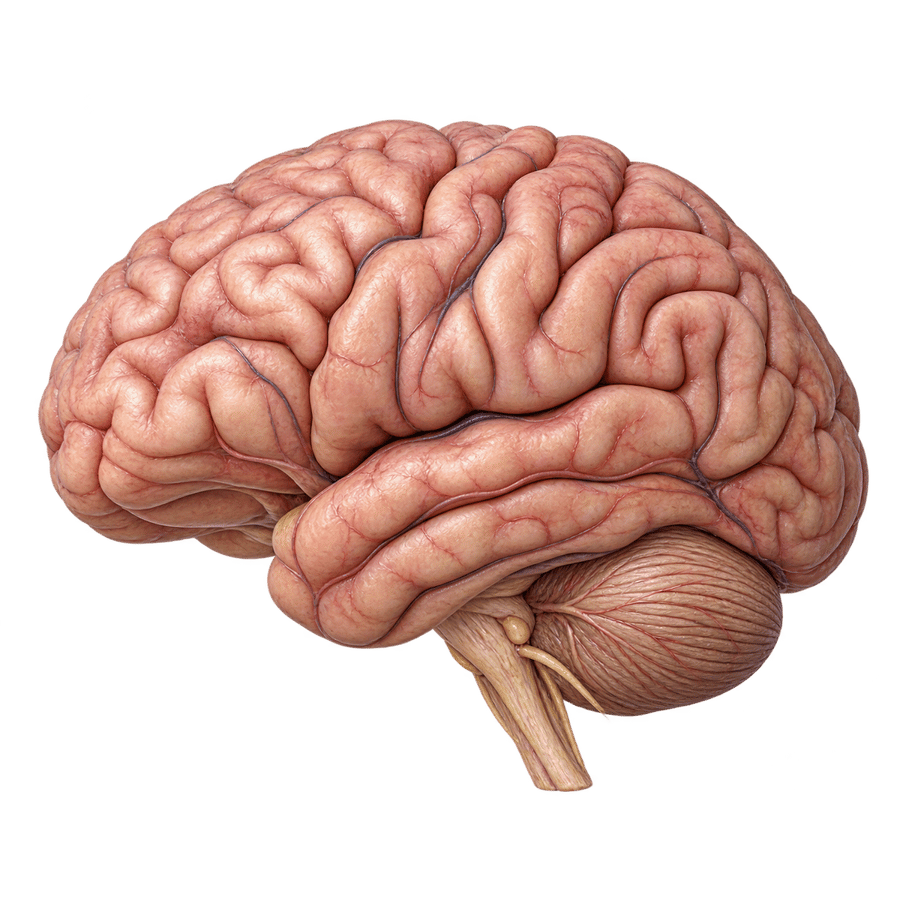
A 2025 review of creatine in women’s health lists possible benefits for mood and thinking, and the brain does use creatine to recharge its energy molecule. A 2024 pooling of 16 trials found small gains in memory and processing speed. The research interest is real, and a few larger, well-run trials could change the picture. Until then, it’s a maybe.
If you’re struggling
Depression is treatable, and a doctor or therapist is the place to start. If you’re thinking about harming yourself, in the US you can call or text 988 to reach the 988 Suicide and Crisis Lifeline, any time of day or night.
4 sources
- Eckert I, Lima J and Dariva AA, Creatine supplementation for treating symptoms of depression: a systematic review and meta-analysis, British Journal of Nutrition, 2025pubmed.ncbi.nlm.nih.gov
- Smith-Ryan AE and others, Creatine in women's health: bridging the gap from menstruation through pregnancy to menopause, JISSN, 2025pmc.ncbi.nlm.nih.gov
- Xu C and others, The effects of creatine supplementation on cognitive function in adults: a systematic review and meta-analysis, Frontiers in Nutrition, 2024pmc.ncbi.nlm.nih.gov
- 988 Suicide and Crisis Lifeline988lifeline.org