Creatinine check
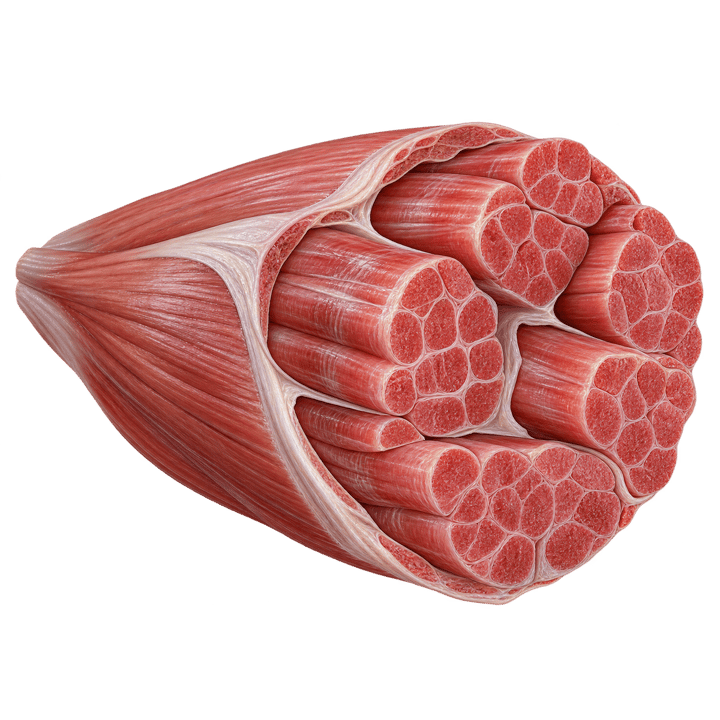
Creatine breaks down into creatinine, the number a standard kidney test uses, so taking it can push your result up while your kidneys work just the same. Put in your result and your lab's range to see how yours compares.
On average, creatine raised creatinine by about 0.13 to 0.14 mg/dL in the trials (somewhere between 0.05 and 0.22).
This isn't a diagnosis.
Why the number moves while your kidneys don't
26 trials, 1,036 people (de Souza Almeida 2026). Filtering was measured directly with a tracer, the method a kidney test only estimates.
Two tests, one switch
Your body makes cystatin C at a steady rate and muscle barely moves it. In a 3 month trial at about 10 g of creatine a day, cystatin C didn't rise (Gualano 2008).
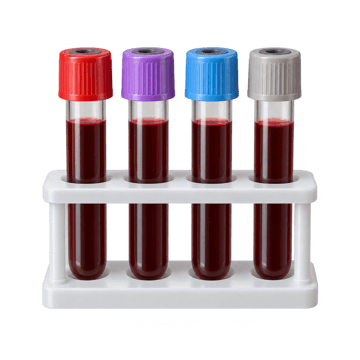
Before a test, tell whoever orders it that you take creatine. Stopping for a few days probably won't clear it, since your stores take about a month to fall, and no study has timed it.
What your result means
Inside your lab's range means there's nothing to explain. Creatine may still have nudged it up a little.
A little over the top, about 0.14 mg/dL, is the size creatine adds on average. Muscle and a hard workout in the days before the test can do the same, and so can your kidneys, which is why a doctor looks at more than one number.
Well over the top is more than creatine usually adds. That result belongs with your doctor, whatever the reason turns out to be.
What to do next
- Tell whoever orders your tests that you take creatine, and how much.
- Ask about cystatin C if your creatinine is high. Muscle and creatine barely move it.
- Don't stop for a few days and retest. Your stores take about a month to fall, so a short break probably won't clear it.
- If you have kidney disease, talk with your doctor before you take creatine at all.
The three numbers
A 2026 review pooled 26 trials and 1,036 people. Creatinine rose, the kidney score worked out from creatinine fell, and the filtering itself, measured directly with a tracer, didn't drop.
| Measure | On creatine, against placebo |
|---|---|
| Creatinine | +0.14 mg/dL (0.05 to 0.22) |
| Kidney score worked out from creatinine | -10.75 mL/min |
| Kidney filtering measured directly | +5.89 mL/min (-0.3 to 12.08) |
A second 2026 review of 20 trials found almost the same shift, +0.13 mg/dL (0.07 to 0.18), with no difference in urea or the kidney score.
Cystatin C, said plainly
Your body makes cystatin C at a steady rate, and muscle mass barely moves it. In 170 healthy adults, creatinine tracked lean mass and cystatin C didn't, and active people had higher creatinine (1.04 against 0.95 mg/dL) with the same cystatin C. In a 3 month trial at about 10 g of creatine a day, cystatin C didn't rise. The National Kidney Foundation lists people with high muscle mass as one of the cases where cystatin C helps. It's less accurate on steroids or with an untreated thyroid problem.
Before a blood test
Tell whoever orders it that you take creatine, and how much. Stopping for a few days probably won't clear it, since your stores take about a month to fall, and no study has timed how fast creatinine comes down.
If you have kidney disease
Talk with your doctor before you take creatine. The ISSN notes that some experts suggest anyone with kidney disease checks with their doctor first. This page isn't a diagnosis, and it never works out a kidney score.
7 sources
- de Souza Almeida A and others, Impact of creatine supplementation on kidney health, Int Urol Nephrol, 2026pubmed.ncbi.nlm.nih.gov
- Tsiaras A and others, The effect of creatine supplementation on kidney function, J Ren Nutr, 2026pubmed.ncbi.nlm.nih.gov
- Gualano B and others, Effects of creatine supplementation on renal function, Eur J Appl Physiol, 2008pubmed.ncbi.nlm.nih.gov
- Baxmann AC and others, Influence of muscle mass and physical activity on serum and urinary creatinine and serum cystatin C, Clin J Am Soc Nephrol, 2008pmc.ncbi.nlm.nih.gov
- National Kidney Foundation, Cystatin C, updated July 26, 2023kidney.org
- Kreider RB and others, International Society of Sports Nutrition position stand: safety and efficacy of creatine supplementation, JISSN, 2017pmc.ncbi.nlm.nih.gov
- Hultman E and others, Muscle creatine loading in men, J Appl Physiol, 1996pubmed.ncbi.nlm.nih.gov