How much creatine should I take?
3 to 5 g of plain creatine monohydrate a day, every day, rest days too. Loading at about 0.3 g per kg of body weight for 6 days is optional. It fills your muscles about three weeks sooner, and it puts more water on the scale that week.
Ask three places and you’ll get three answers. One calculator multiplies your weight by 0.03 g and tells a 180 lb person to take 2.4 g. The tub says 20 g a day for the first week. The biggest guy at your gym takes two heaped scoops because he’s big. They all look like math, so they all sound right.
What we’d do
Take 3 to 5 g with a meal you never skip, and don’t bother loading unless you need it working within a week. Your muscles end up equally full either way. Put your weight and start date into the dose tool and it gives you the day they’re full.
Why it’s a small, flat dose
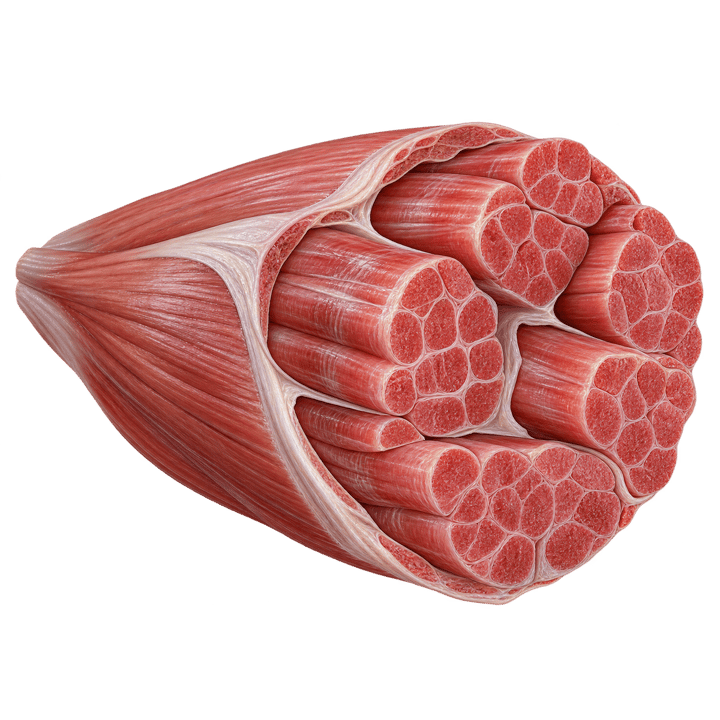
Your muscles already hold creatine, about 95% of all the creatine in your body. On a mixed diet they sit at about 120 units (mmol per kg of dry muscle) out of a ceiling near 160, so you start about three quarters full. Food gives you about half of what you use each day, and your liver and kidneys make the rest. A scoop only has to top up the gap, which raises your stores by 20 to 40%.
That gap fills on a few grams a day. In the 1996 trial behind the dose, 31 men took creatine in different amounts, and 3 g a day raised muscle creatine by about 20% over 28 days. 20 g a day got to the same 20% in 6 days, and after that, 2 g a day kept it there for another month.
Think of a bathtub that’s already three quarters full. You can top it up with the tap on full or on a trickle, and it ends at the same line either way. Once it’s full, the extra goes down the drain. In a 1992 trial, three people loading at 30 g a day passed 40 to 68% of it in their urine over the first three days.
The numbers by weight
Every day is 3 to 5 g for everyone. Loading is about 0.3 g per kg a day for 6 days, and we cap it at 25 g a day, which 0.3 g per kg reaches at about 183 lb (83 kg). Split the loading amount into four servings so none of them is over 10 g.
| Your weight | Every day | Loading, 6 days | Each of 4 servings |
|---|---|---|---|
| 120 lb (54 kg) | 3 to 5 g | 16 g | 4 g |
| 140 lb (64 kg) | 3 to 5 g | 19 g | about 5 g |
| 160 lb (73 kg) | 3 to 5 g | 22 g | 5.5 g |
| 180 lb (82 kg) | 3 to 5 g | 24 g | 6 g |
| 200 lb (91 kg) | 3 to 5 g | 25 g, the cap | about 6 g |
| 220 lb (100 kg) and up | 3 to 5 g, up to 10 g for big athletes in hard training | 25 g, the cap | about 6 g |
The International Society of Sports Nutrition says 3 to 5 g a day keeps stores full, and that larger athletes in hard training may need 5 to 10 g. If you’re over 220 lb and lift four or more days a week, 5 g is still a fine place to start. If you go above 5 g, split it. In a 2008 trial of 59 soccer players, one 10 g dose a day gave 56% of them diarrhea, against 29% on two 5 g doses.
What a scoop really is
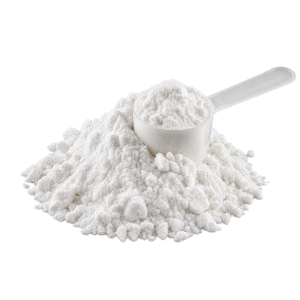
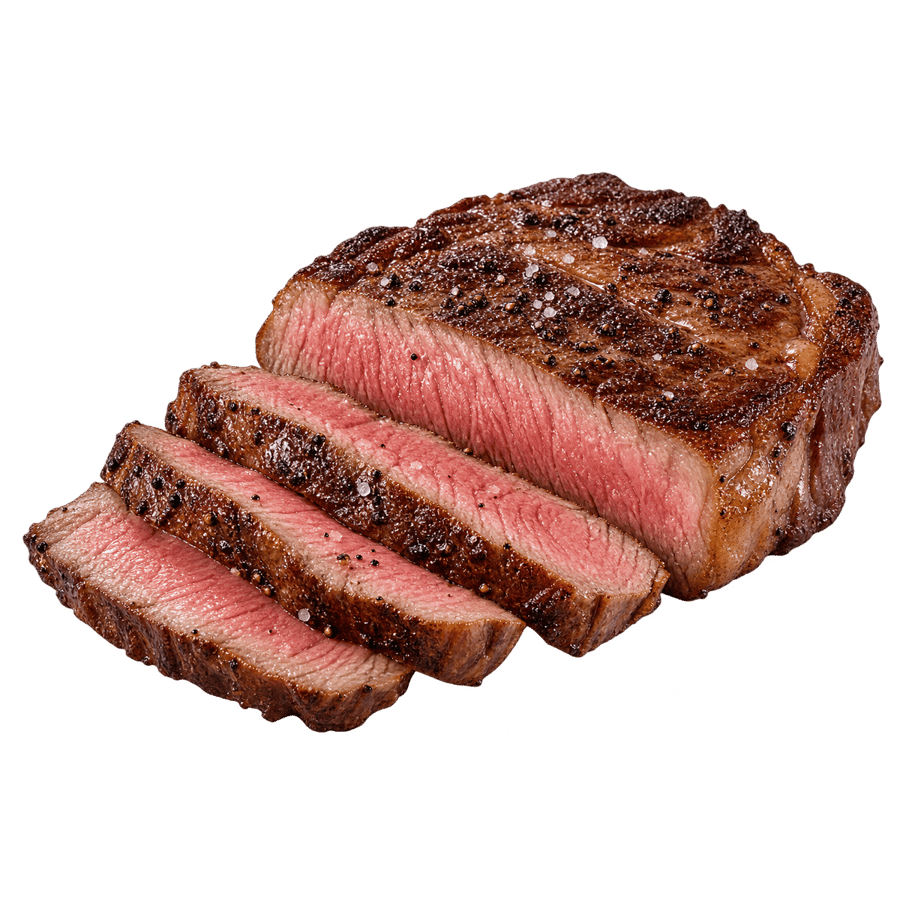
A single 5 g dose holds about as much creatine as 2.4 lb (1.1 kg) of raw steak, and cooking leaves less in the meat. A normal diet brings in 1 to 2 g a day, which is why food leaves your stores 60 to 80% full. Plain monohydrate is 87.9% creatine by weight, so a 5 g scoop carries about 4.4 g of creatine. The trials dosed grams of monohydrate, and labels count it the same way, so you don’t need to do the conversion. Foods high in creatine has the numbers for each meat and fish.
Under 18, pregnant or breastfeeding, or with kidney disease, ask your doctor before you take any. The dose tool doesn’t print a dose for these groups.
6 sources
- Hultman E and others, Muscle creatine loading in men, J Appl Physiol, 1996pubmed.ncbi.nlm.nih.gov
- Kreider RB and others, International Society of Sports Nutrition position stand: safety and efficacy of creatine supplementation in exercise, sport, and medicine, JISSN, 2017pmc.ncbi.nlm.nih.gov
- Antonio J and others, Common questions and misconceptions about creatine supplementation: what does the scientific evidence really show?, JISSN, 2021pmc.ncbi.nlm.nih.gov
- Harris RC, Soderlund K and Hultman E, Elevation of creatine in resting and exercised muscle of normal subjects by creatine supplementation, Clinical Science, 1992pubmed.ncbi.nlm.nih.gov
- Ostojic SM and Ahmetovic Z, Gastrointestinal distress after creatine supplementation in athletes: are side effects dose dependent?, Research in Sports Medicine, 2008pubmed.ncbi.nlm.nih.gov
- Purchas RW, Busboom JR and Wilkinson BH, Changes in the forms of iron and in concentrations of taurine, carnosine, coenzyme Q10, and creatine in beef longissimus muscle with cooking and simulated stomach and duodenal digestion, Meat Science, 2006pubmed.ncbi.nlm.nih.gov