HCl and other new forms work better than monohydrate
Short answerNo
On this page
No. Plain creatine monohydrate is already 87.9% creatine, and about 99% of what you swallow is either taken up by your body or passed in urine, so there’s almost nothing for a fancier form to improve. Creatine HCl did no better than monohydrate in two head-to-head trials, and no published study shows any other form fills your muscles better at the same amount.
What we’d do
Buy plain creatine monohydrate powder with a third-party test mark and take 3 to 5 g a day. Don’t pay extra for HCl, buffered, ethyl ester, nitrate or a liquid. If a smaller scoop of HCl appeals, know that the two trials that compared them used equal amounts and found no edge.
If you remember three things
- Monohydrate is nearly all creatine and nearly all absorbed. 87.9% by weight, about 99% used or passed.
- HCl did no better. Two trials found no difference.
- Dissolving better doesn’t mean working better. How well creatine dissolves doesn’t change how much reaches muscle.
Why people believe it
Newer usually sounds better, and the labels lean on it. Creatine HCl is sold as better absorbed, so you need less. Buffered creatine is sold as easier on the stomach. Ethyl ester was sold as getting into muscle without the usual transporter. Each claim sounds like a fix for a problem, and each comes at a higher price per gram.
The problem they claim to fix mostly isn’t there. Monohydrate already gets into your body almost completely.
It’s like fast-dissolving sugar
You can buy sugar that dissolves faster in iced tea. It disappears quicker when you stir, and the tea ends up exactly as sweet. HCl is the fast-dissolving sugar. It mixes into water more easily, and your muscles end up with the same creatine.
What monohydrate already does
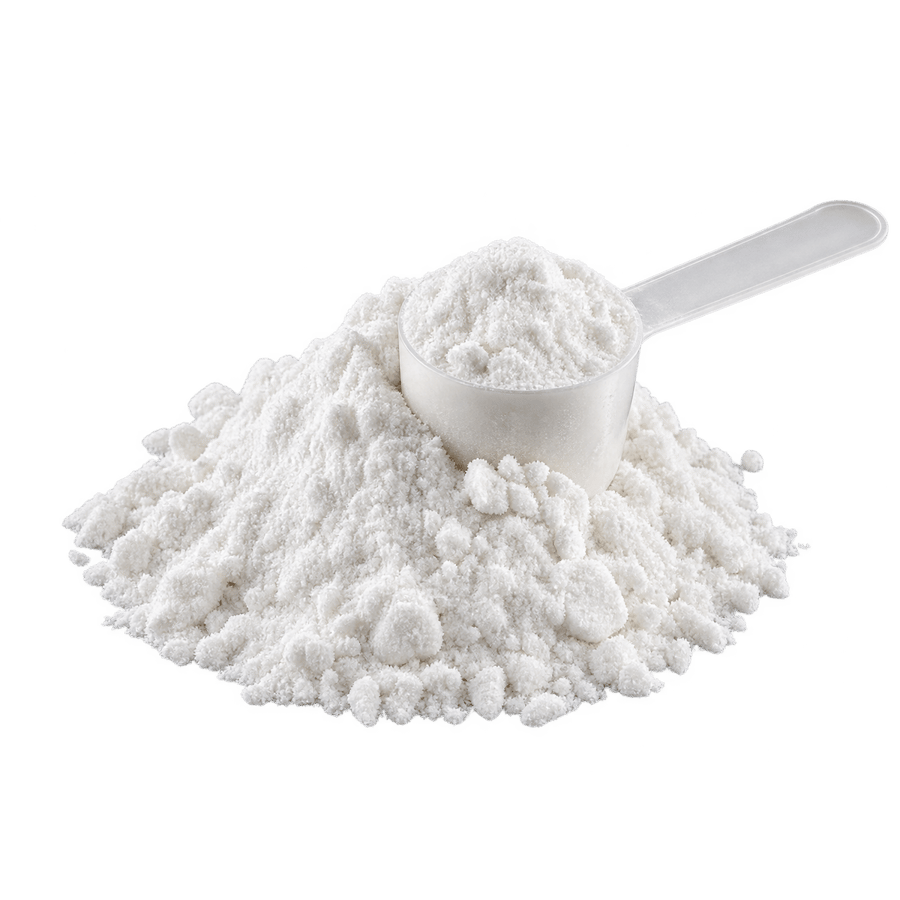
A 2021 review set out the chemistry. Monohydrate is one molecule of creatine with one molecule of water, and it contains 87.9% creatine by weight, the most of any form except anhydrous, which is the same thing without the water. About 99% of the monohydrate you swallow is either taken up by your tissues or passed in urine. As a powder it keeps for years without breaking down.
It’s also the form behind nearly all the research. The trials that set the dose and showed how fast muscles fill, like the 1996 trial where 20 g and 3 g a day both raised muscle creatine by 20%, used monohydrate.
What the head-to-head trials found
HCl against monohydrate, with lifting
40 young adults, 8 weeks. Physiological Research, 2024
People lifted on HCl, on monohydrate with or without a loading week, or on a placebo. All three creatine groups gained more strength and muscle than placebo, and HCl showed no benefit over monohydrate.
Ten people per group.
HCl against monohydrate, in athletes
31 handball and softball players, 8 weeks. 2025
At 5 g a day, there were no differences between monohydrate and HCl on any measure. The researchers called claims of HCl’s superiority “unfounded and misleading”.
A conference summary, and a small trial. Two of its authors advise a creatine maker.
What about the other forms?
The 2021 review looked for evidence on creatine salts, effervescent creatine, ethyl ester, buffered creatine, nitrate, creatine bonded to amino acids, and the tiny amounts in creatine drinks. It found no peer-reviewed paper showing that any of them, taken in equal amounts, raises muscle creatine more than monohydrate.
Liquid creatine has an extra problem. Creatine isn’t stable in water. It slowly turns into creatinine, faster when it’s warm or acidic, which is why creatine is sold almost entirely as a powder.
Does dissolving better help?
Not with what ends up in your muscles. Monohydrate dissolves poorly in cold water, about 14 g per liter at room temperature, which is why the first trials served it in hot tea. The 2021 review notes that how well creatine dissolves has no influence on how much your tissues take up. A gritty drink is annoying, but it carries the same creatine. Stir a 5 g scoop into about 12 oz (350 mL) of water, or something warm, and drink it soon.
The best case for HCl
Some people find plain monohydrate hard on their stomach, and HCl’s smaller dose sounds gentler. That’s reasonable to try if monohydrate bothers you. But big single doses are what usually upset stomachs, so first try splitting monohydrate into two servings of 2.5 g, and skip loading. In a 2008 trial of 59 soccer players, two 5 g doses a day caused no more diarrhea than a placebo, while one 10 g dose did.
6 sources
- Antonio J and others, Common questions and misconceptions about creatine supplementation: what does the scientific evidence really show?, JISSN, 2021pmc.ncbi.nlm.nih.gov
- Eghbali E, Arazi H, Suzuki K, Supplementing with which form of creatine (hydrochloride or monohydrate) alongside resistance training can have more impacts on anabolic/catabolic hormones, strength and body composition?, Physiological Research, 2024pmc.ncbi.nlm.nih.gov
- Londoño-Velásquez D and others, Creatine monohydrate versus creatine hydrochloride on strength and body composition in elite team-sport athletes, JISSN conference supplement, 2025pmc.ncbi.nlm.nih.gov
- Kreider RB and others, International Society of Sports Nutrition position stand: safety and efficacy of creatine supplementation in exercise, sport, and medicine, JISSN, 2017pmc.ncbi.nlm.nih.gov
- Ostojic SM, Ahmetovic Z, Gastrointestinal distress after creatine supplementation in athletes: are side effects dose dependent?, Research in Sports Medicine, 2008pubmed.ncbi.nlm.nih.gov
- Hultman E and others, Muscle creatine loading in men, J Appl Physiol, 1996pubmed.ncbi.nlm.nih.gov