Is creatine HCl better than monohydrate?
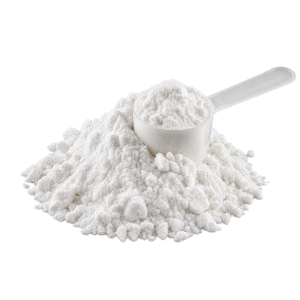
No. In two trials that compared them head to head, creatine HCl did no better than plain monohydrate. Monohydrate is already 87.9% creatine by weight, and almost all of it gets absorbed. It’s also the form most of the research used. Buy plain monohydrate.
HCl is sold as the upgrade. The pitch is that it dissolves better, so it absorbs better, so you need a smaller dose. The smaller scoop makes it feel more advanced. Every part of that story sounds reasonable until you look at what monohydrate already does.
What we’d do
Buy plain creatine monohydrate powder with a third-party test mark, and take 3 to 5 g a day. Spend what you save on food. If a smaller scoop is what you want, 3 g of monohydrate fills your muscles in about four weeks.
Monohydrate has nothing left to fix
The absorption pitch needs monohydrate to be poorly absorbed, and it isn’t. A 2021 review of creatine questions, by a team of creatine researchers, says about 99% of swallowed monohydrate is either taken up by your tissues or passed in your urine. Less than 1% breaks down into creatinine on the way through your gut.
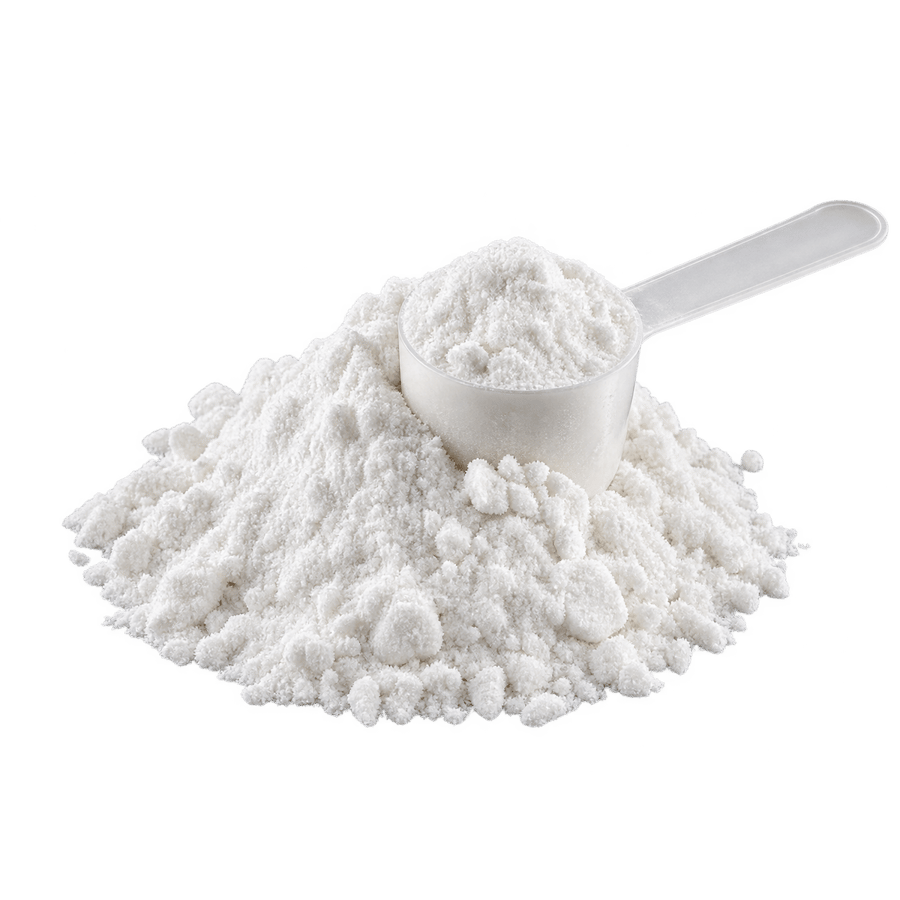
Monohydrate is also the most concentrated form you can buy, at 87.9% creatine. The only form with more is creatine anhydrous, which is monohydrate with the water taken out. Other forms add something else to each gram, so you get less creatine per gram.
Dissolving better doesn’t help either. Monohydrate only dissolves at about 14 g per liter of room-temperature water, which is why early studies gave it in hot tea. The same review says how well it dissolves “has no influence on tissue uptake.”
It’s like paying for premium gas in a car built for regular. It runs exactly the same, and you paid more for the trip.
The two trials
| Trial | Who | What they took | What happened |
|---|---|---|---|
| Eghbali 2024 | 40 young adults, 8 weeks of lifting | HCl at 0.03 g per kg, monohydrate with or without loading, or placebo | Both forms beat placebo on strength and muscle. HCl showed no benefit over monohydrate |
| Londono-Velasquez 2025 | 31 elite handball and softball players, 8 weeks | 5 g a day of HCl, monohydrate, or placebo | No difference between groups on any measure |
The second trial called claims of HCl’s superiority “unfounded and misleading”. It’s a conference abstract, and two of its authors sit on a scientific board sponsored by a monohydrate maker, which the paper discloses. The first trial, from a different group, found the same thing.
What about the other forms?
The 2021 review found no peer-reviewed study showing that salts, ethyl ester, buffered creatine, nitrate or other forms raise muscle creatine more than monohydrate at the same amount. The International Society of Sports Nutrition calls monohydrate the most studied and clinically effective form.
The cost tool works out what a real 5 g day costs for any tub you’re looking at, and which creatine to buy covers labels and test marks.
4 sources
- Eghbali E, Arazi H and Suzuki K, Supplementing with which form of creatine (hydrochloride or monohydrate) alongside resistance training can have more impacts on anabolic/catabolic hormones, strength and body composition?, Physiological Research, 2024pmc.ncbi.nlm.nih.gov
- Londono-Velasquez D and others, Creatine monohydrate versus creatine hydrochloride on strength and body composition in elite team-sport athletes: a placebo-controlled randomized clinical trial comparing low dosages, JISSN conference abstract, 2025pmc.ncbi.nlm.nih.gov
- Antonio J and others, Common questions and misconceptions about creatine supplementation: what does the scientific evidence really show?, JISSN, 2021pmc.ncbi.nlm.nih.gov
- Kreider RB and others, International Society of Sports Nutrition position stand: safety and efficacy of creatine supplementation in exercise, sport, and medicine, JISSN, 2017pmc.ncbi.nlm.nih.gov