Should I stop creatine before a blood test?
On this page
Tell your doctor instead. Creatinine comes from the creatine stored in your muscles, and those stores take about a month to fall after you stop, so a few days off probably won’t clear the rise. No study has timed it. Say how much you take, and ask about cystatin C if creatinine comes back high.
The usual advice online is to skip creatine for two or three days before blood work. It sounds sensible. Creatine raises creatinine, so stop the creatine and the number should drop back.
What we’d do
Keep taking it and tell whoever orders the test that you take creatine, how much and since when. Don’t load in the week before a blood test. If your creatinine comes back high, ask whether a cystatin C test makes sense.
Why a few days off doesn’t do much
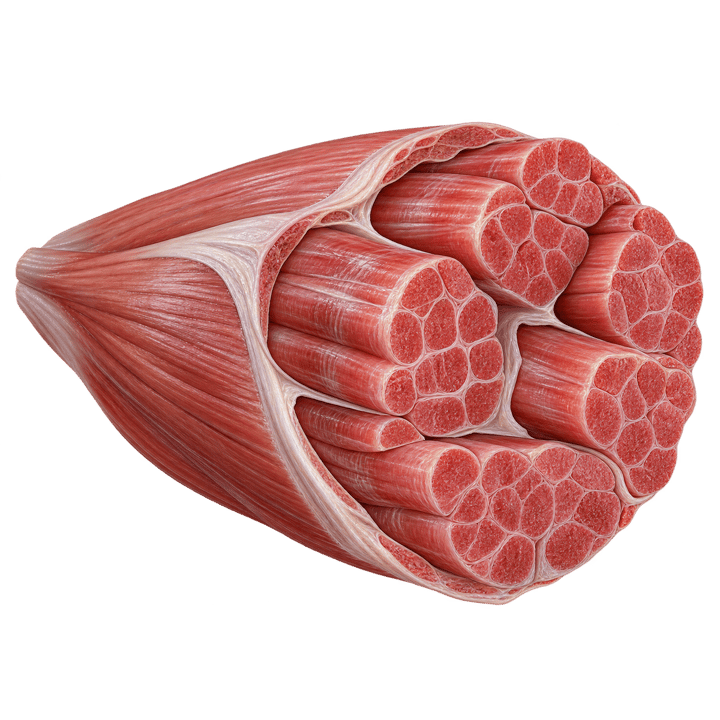
The creatinine in your blood doesn’t come straight from today’s scoop. It comes from the creatine stored in your muscles, about 1 to 2% of which breaks down every day. Stopping the scoop doesn’t empty those stores. It just stops topping them up, and they drain slowly.
The 1996 trial in Nottingham measured how slowly. Men who had loaded their muscles stopped taking creatine, and their muscle creatine fell gradually until it was back where it started 30 days later. Through that whole month, the creatinine in their urine stayed raised. The International Society of Sports Nutrition puts the return at 4 to 6 weeks.
It’s like turning off a tap above a full bathtub with a slow drain. The water keeps running out at the higher rate for a good while, because the tub is still full.
Nobody has measured blood creatinine day by day after people stop creatine, so we can’t give you an exact number of days. The muscle data say it’s weeks.
Why telling beats stopping
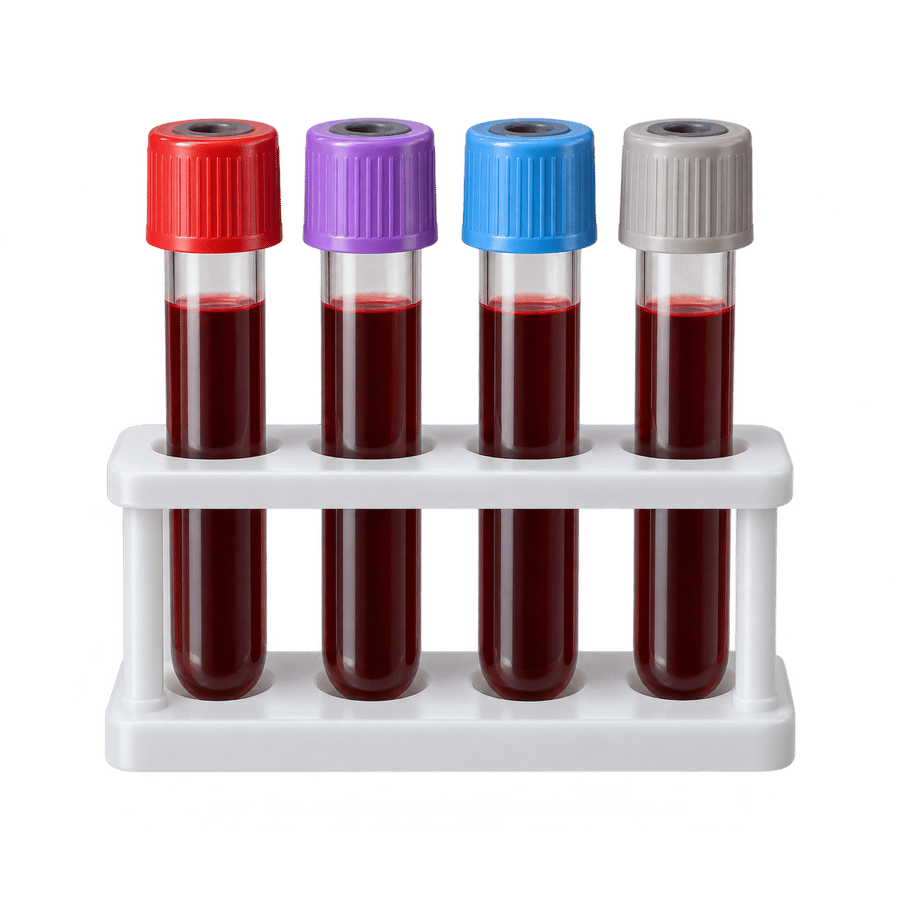
A creatinine result is much easier to judge when your doctor knows what you take. Across the trials, creatine raised creatinine about 0.13 to 0.14 mg/dL on average, and the kidney score worked out from creatinine came out about 11 mL/min lower, while filtering measured directly didn’t change. A doctor who knows about the creatine can account for that. One who doesn’t may chase a kidney problem that isn’t there.
Cystatin C is the other kidney marker, and muscle barely moves it. The National Kidney Foundation says it may give a more accurate result for people who are older or have lots of muscle. It can be off with an untreated thyroid problem or on steroids.
If your doctor wants a clean creatinine
Sometimes a doctor wants a number with no creatine in it, for example to compare with an old result. Since stores take 4 to 6 weeks to fall back, ask how long they’d like you off it, and plan around the test date. When you start again, you’ll be full in about four weeks on 3 to 5 g a day.
Where the expert groups stand
- Two 2026 reviews of the trials, 26 and 20 trials. Creatinine rises 0.13 to 0.14 mg/dL on creatine. Filtering measured directly didn’t drop.
- National Kidney Foundation, updated 2023. Cystatin C may be more accurate than creatinine for older people and people with lots of muscle.
- International Society of Sports Nutrition, 2017. Muscle creatine takes 4 to 6 weeks to return to its starting level after stopping.
Checked against these sources on November 14, 2026.
5 sources
- Hultman E and others, Muscle creatine loading in men, J Appl Physiol, 1996pubmed.ncbi.nlm.nih.gov
- Kreider RB and others, International Society of Sports Nutrition position stand: safety and efficacy of creatine supplementation in exercise, sport, and medicine, JISSN, 2017pmc.ncbi.nlm.nih.gov
- National Kidney Foundation, Cystatin C, updated 2023kidney.org
- de Souza Almeida A and others, Impact of creatine supplementation on kidney health: a systematic review and meta-analysis, International Urology and Nephrology, 2026pubmed.ncbi.nlm.nih.gov
- Tsiaras A and others, The effect of creatine supplementation on kidney function: a systematic review and meta-analysis of randomized controlled trials, Journal of Renal Nutrition, 2026pubmed.ncbi.nlm.nih.gov