Why did my creatinine go up on creatine?
On this page
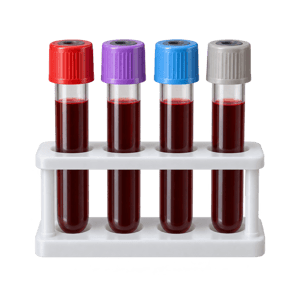
Creatine breaks down into creatinine, so when your muscles hold more creatine, more creatinine ends up in your blood. Across the trials it went up about 0.13 to 0.14 mg/dL on average. Tell your doctor you take creatine and ask about a cystatin C test, which creatine barely moves.
You got a routine blood panel back and one line is flagged. Creatinine is a little high, and the kidney score next to it is a little low. Search it and you’ll find a lot about kidney disease. It’s easy to miss that the scoop you take every morning is what creatinine is made from.
What we’d do
Don’t panic, and don’t just stop on your own. Take the result to your doctor, tell them you take creatine, how much and since when, and ask whether a cystatin C test makes sense. If your result is well above your lab’s range, more than about 0.2 mg/dL over, take it seriously whatever you’re taking.
Where creatinine comes from
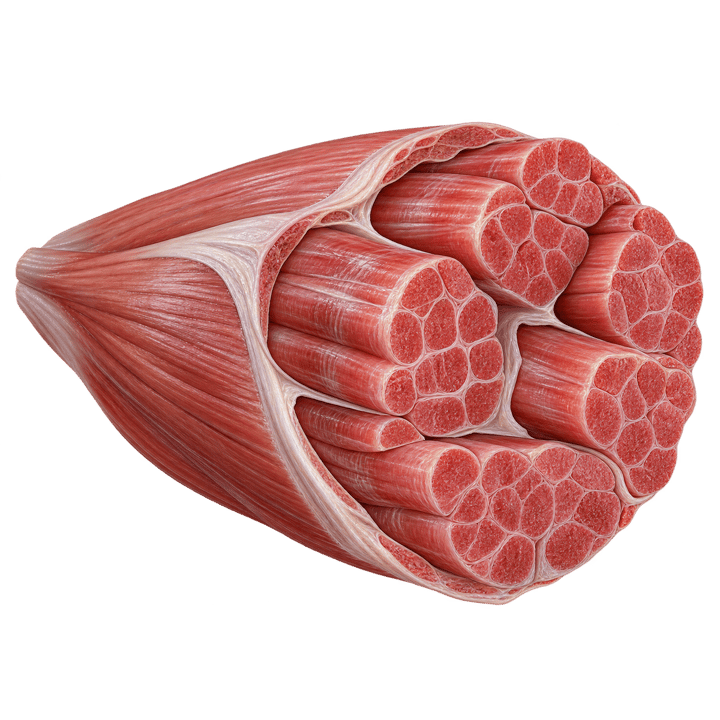
Your muscles store creatine, and every day about 1 to 2% of it breaks down into creatinine, which your kidneys filter out into your urine. The amount you make depends mostly on how much creatine is in your muscles. A scoop a day raises your muscle creatine by 20 to 40%, so you make more creatinine, and more of it sits in your blood at any moment.
A standard kidney test takes that creatinine number, along with your age and sex, and works out an estimated filtering rate (eGFR). It assumes your muscles make creatinine at the usual rate. On creatine they don’t, so the estimate comes out lower even when your kidneys are filtering exactly as before.
It’s like guessing how fast a sink drains by how full it is. Turn the tap up a little and the sink sits fuller, so it looks like a slow drain.
How big the shift is
In a 2026 review of 26 trials and 1,036 people, creatinine went up 0.14 mg/dL (range 0.05 to 0.22), about 12 µmol/L. The kidney score worked out from creatinine fell about 11 mL/min, while filtering measured directly with a tracer didn’t fall. A second 2026 review of 20 trials found 0.13 mg/dL. More muscle and a more active life raise creatinine too. In a 2008 study of 170 healthy adults, active people averaged 1.04 against 0.95 mg/dL for sedentary people, with the same cystatin C.
As a rough guide, the creatinine check uses 0.2 mg/dL (18 µmol/L) as the line. Up to that much over your lab’s top is about the size creatine adds on average. More than that is bigger than creatine usually explains, so it needs your doctor whatever the cause.
Why cystatin C helps
Cystatin C is another kidney marker, and muscle barely moves it. In 2008, 18 healthy young men took about 10 g of creatine a day for three months, and their cystatin C fell slightly, the same as the placebo group’s. The National Kidney Foundation says cystatin C may give a more accurate result for people who are older or have lots of muscle, and that it can be off with an untreated thyroid problem or on steroids.
What to say to your doctor
Try something like this. “I take 5 g of creatine monohydrate a day and have since March. In trials, creatine raised creatinine without lowering measured kidney filtering. Could we check cystatin C, or repeat this with that in mind?” Stopping for a few days won’t clear it, since your stores take about a month to drain (see stopping before a blood test).
Where the expert groups stand
- Two 2026 reviews of the trials, 26 and 20 trials. Creatinine rises 0.13 to 0.14 mg/dL on creatine. Filtering measured directly didn’t drop, and urea didn’t change.
- National Kidney Foundation, updated 2023. Cystatin C may be more accurate than creatinine for older people and people with lots of muscle.
- International Society of Sports Nutrition, 2017. People with kidney disease are advised to check with their doctor before taking creatine.
Checked against these sources on November 14, 2026.
7 sources
- de Souza Almeida A and others, Impact of creatine supplementation on kidney health: a systematic review and meta-analysis, International Urology and Nephrology, 2026pubmed.ncbi.nlm.nih.gov
- Tsiaras A and others, The effect of creatine supplementation on kidney function: a systematic review and meta-analysis of randomized controlled trials, Journal of Renal Nutrition, 2026pubmed.ncbi.nlm.nih.gov
- Kreider RB and others, International Society of Sports Nutrition position stand: safety and efficacy of creatine supplementation in exercise, sport, and medicine, JISSN, 2017pmc.ncbi.nlm.nih.gov
- Gualano B and others, Effects of creatine supplementation on renal function: a randomized, double-blind, placebo-controlled clinical trial, European Journal of Applied Physiology, 2008pubmed.ncbi.nlm.nih.gov
- Baxmann AC and others, Influence of muscle mass and physical activity on serum and urinary creatinine and serum cystatin C, Clinical Journal of the American Society of Nephrology, 2008pmc.ncbi.nlm.nih.gov
- National Kidney Foundation, Cystatin C, updated 2023kidney.org
- Hultman E and others, Muscle creatine loading in men, J Appl Physiol, 1996pubmed.ncbi.nlm.nih.gov