Creatine after 50
On this page
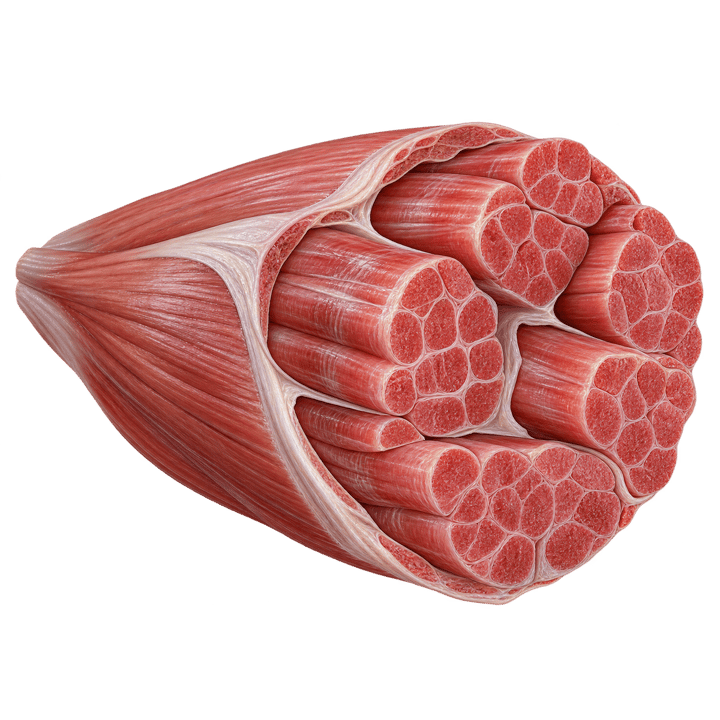
With lifting two or three days a week, creatine helps. Across 22 trials of people in their late 50s to 70, it added about 3 lb (1.37 kg) more lean tissue than lifting alone, plus more strength on the chest press and leg press. Without lifting, there’s little for it to work with.
There are two stories about creatine after 50, and they pull in opposite directions. One says it’s a young bodybuilder’s supplement, too intense or too risky for an older body. The newer one, helped along by headlines in 2026, says it’s an anti-aging powder that keeps your muscle even if you never exercise.
Both miss what the trials show. Creatine works well for older adults, at the same dose as anyone else, and it works through the lifting.
What we’d do
Lift first. Two or three days a week of resistance training is what keeps muscle as you age, and it’s what creatine needs to do anything. Then add 3 to 5 g of plain monohydrate every day. Before you start, tell your doctor, since creatine raises creatinine, the number most kidney tests use. If you have kidney disease or take medicines for your kidneys, ask first.
If you remember three things
- Lift two or three days a week, then add creatine. The trials that worked combined the two.
- The dose is the same at any age. 3 to 5 g a day.
- Tell your doctor before blood tests. Creatine raises creatinine without hurting your kidneys.
Creatine is the seasoning, lifting is the meal
Good seasoning makes a meal better, but you can’t live on salt and pepper. Without the meal there’s nothing for it to improve. Across 35 trials, creatine with lifting added 2.4 lb (1.1 kg) of lean mass, and creatine without any exercise added nothing.
What do the trials in older adults show?
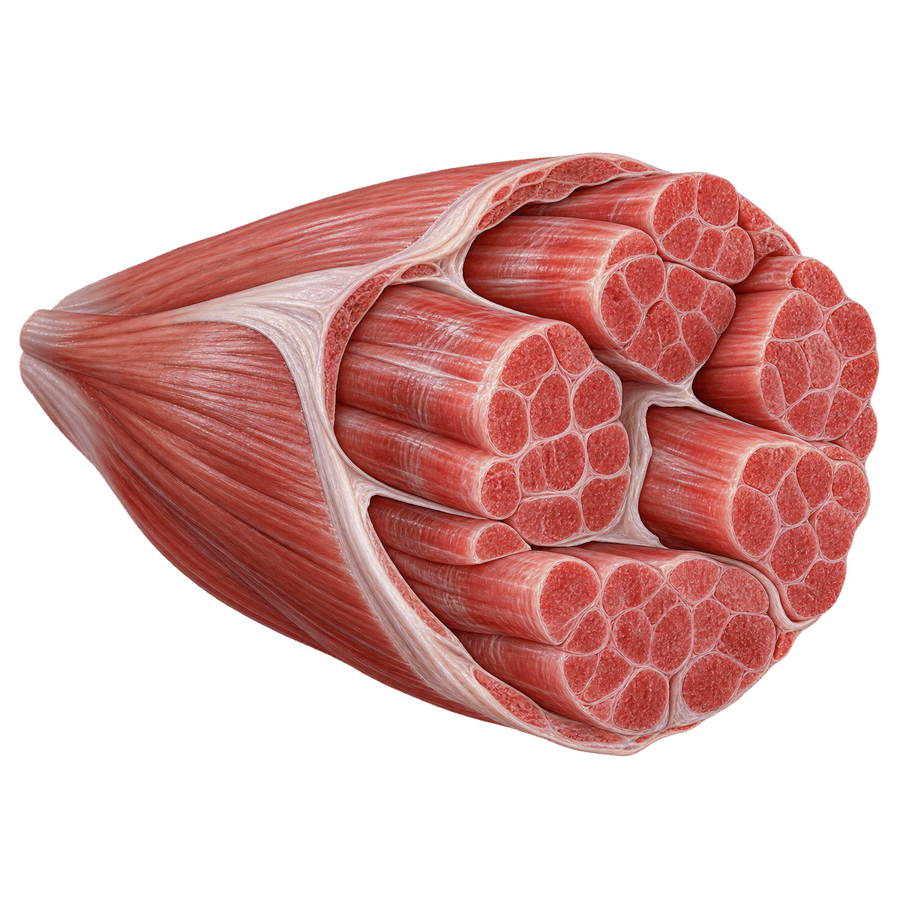
In 2017, Philip Chilibeck’s group at the University of Saskatchewan pooled 22 trials and 721 people, with average ages from 57 to 70. Everyone lifted two or three days a week, for anywhere from 7 weeks to a year. Compared with placebo, creatine added:
- 1.37 kg (3 lb) of lean tissue, with a range of 0.97 to 1.76 kg.
- More chest press strength, a small to moderate effect.
- More leg press strength, a small effect.
A 2021 review describes creatine with lifting as one of the more promising ways to slow the muscle loss of aging, while noting that creatine alone, without training, doesn’t do the same job.
The two-year trial and the faster walk
The longest trial is the most useful one for daily life. Chilibeck’s group gave 237 women around 59 either creatine or a placebo for two years, while all of them lifted three days a week and walked six days a week. The trial was designed to test bones, and creatine didn’t change bone density.
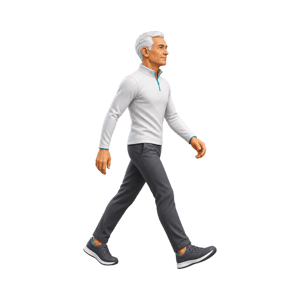
It did change how they walked. The women on creatine covered 80 m in 47.1 seconds by the end, against 48.6 seconds at the start. The placebo group went from 48.3 to 48.2. That’s about 3% faster, from a supplement in a trial that was looking for something else.
Does creatine work if you don’t exercise?
That’s what the 2026 headlines said, and the evidence is thin. In a trial of adults aged 45 to 65, 64 finished 12 weeks on either 10 g of creatine a day or a placebo. Each chose beforehand whether to join an exercise and diet program. In the group that didn’t exercise, creatine added about 1 kg (2.2 lb) of lean tissue.
That group had 13 people at the end. The dose was double the usual 5 g. And the body scan that measured lean tissue counts water as lean tissue, while creatine brings water into muscle. Against that, a 2022 review of 35 trials found no lean mass gain at all without exercise. If you can lift, lift. If you can’t yet, start with what you can do, and treat creatine without exercise as a long shot.
Is it safe at your age?
At 3 to 5 g a day for healthy adults, yes, and the trials in older adults haven’t turned up new problems. The pooled trials in women after menopause found kidney measures unchanged.
The thing to know is what it does to a blood test. Creatine raises creatinine by about 0.14 mg/dL on average, which makes the kidney score worked out from creatinine look lower, even though kidney filtering measured directly doesn’t drop. The National Kidney Foundation lists older adults as one of the groups where a cystatin C test can help, because creatinine can mislead. Tell your doctor you take creatine before any blood test. Is creatine safe? has the details.
If you have kidney disease, check with your doctor before taking creatine. If you take several medicines, mention it to whoever prescribes them.
Does it help memory as you age?
A little, maybe. A 2024 review of 16 trials, with people aged about 20 to 76, found small gains in memory, and people aged 18 to 60 benefited more than older people. Nothing yet shows creatine prevents memory loss. Take it for your muscles, and treat any effect on memory as a bonus.
How do you know it’s working?
Pick a test you can repeat. After 60, the 30-second chair stand is a good one, and strength.guide shows how to do it and what’s typical for your age. Test it twice in your first week and again at week eight. strength.guide also covers how lifting changes as you get older. How to tell if it worked has the rule for counting a change as real.
What else helps?
Protein. Older muscle needs enough protein to rebuild after lifting, and creatine doesn’t replace it. protein.guide has how much protein you need after 50. lifespan.guide covers why it’s not too late to start after 50.
10 sources
- Chilibeck PD and others, Effect of creatine supplementation during resistance training on lean tissue mass and muscular strength in older adults: a meta-analysis, Open Access Journal of Sports Medicine, 2017pmc.ncbi.nlm.nih.gov
- Chilibeck PD and others, A 2-yr randomized controlled trial on creatine supplementation during exercise for postmenopausal bone health, Med Sci Sports Exerc, 2023pmc.ncbi.nlm.nih.gov
- Delpino FM and others, Influence of age, sex, and type of exercise on the efficacy of creatine supplementation on lean body mass, Nutrition, 2022pubmed.ncbi.nlm.nih.gov
- Chun J and others, Effects of creatine supplementation with and without exercise and diet intervention on body composition, cognitive function, and markers of health in middle-aged and older adults, JISSN, 2026doi.org
- Naddafha S, Antonio J, Kreider RB, Stout JR, Creatine monohydrate for lean mass, strength, and bone density in postmenopausal women: a systematic review and meta-analysis, JISSN, 2026doi.org
- Antonio J and others, Common questions and misconceptions about creatine supplementation: what does the scientific evidence really show?, JISSN, 2021pmc.ncbi.nlm.nih.gov
- Kreider RB and others, International Society of Sports Nutrition position stand: safety and efficacy of creatine supplementation in exercise, sport, and medicine, JISSN, 2017pmc.ncbi.nlm.nih.gov
- National Kidney Foundation, Cystatin C, last updated July 26, 2023kidney.org
- de Souza Almeida A and others, Impact of creatine supplementation on kidney health: a systematic review and meta-analysis, International Urology and Nephrology, 2026pubmed.ncbi.nlm.nih.gov
- Xu C and others, The effects of creatine supplementation on cognitive function in adults: a systematic review and meta-analysis, Frontiers in Nutrition, 2024pmc.ncbi.nlm.nih.gov